
How Well Do You Know Chinese Food?
Take the Mandarin Made Clear Food Challenge!
Do you have a favorite Chinese food?
Maybe it's something you order every time you visit your favorite Chinese restaurant. Or maybe you like trying something new.
You know what it looks like. You know what it tastes like. You probably know what it's called in English.
But do you know what it's called in Mandarin?
Let's find out! How many of the foods in our Chinese Food Challenge can you identify?
Can You Name These Foods in Mandarin?
Take a look at the four foods below. Then use the Mandarin clues to match each food name to picture 1, 2, 3, or 4.
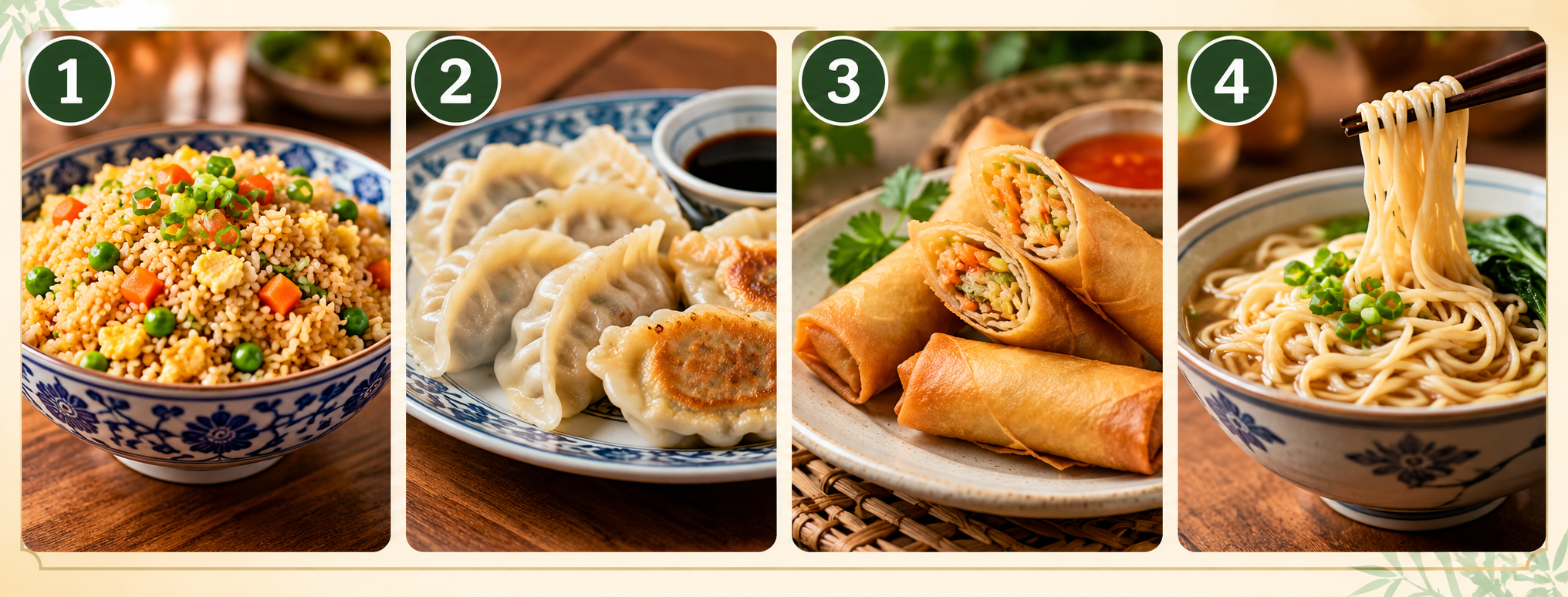
A. 春卷 chūnjuǎn
Here’s a clue you can almost translate yourself: 春 chūn means “spring,” and 卷 juǎn means “roll.”
Picture: _____
B. 面条 miàntiáo
面 miàn is associated with flour and foods made from it, and 条 tiáo can refer to something long and narrow.
Picture: _____
C. 炒饭 chǎofàn
炒 chǎo means “stir-fry,” and 饭 fàn can mean “rice” or “meal.”
Picture: _____
D. 饺子 jiǎozi
The name itself may not help a beginner much, so here’s a cultural clue: these filled dough parcels are especially associated with Chinese New Year.
Picture: _____
Made Your Guesses? Keep your answers in mind! You'll find the answer key at the bottom of the page.
But before you check your score, you'll need something to eat all that food with.
Can You Use 筷子?
筷子 kuàizi means “chopsticks.”
Chopsticks have a very long history in China. Early chopsticks were used thousands of years ago, probably first for cooking and serving food. Over time, they became the everyday eating utensils we recognize today.
Chopsticks are now used in China and in several other East Asian cultures, although their shapes, materials, and customs aren't exactly the same everywhere.
If you didn't grow up using chopsticks, they can seem surprisingly difficult at first. But there's one important trick:
Don't try to move both chopsticks.
The bottom chopstick stays relatively still. The top chopstick does most of the moving.
Ready to try?
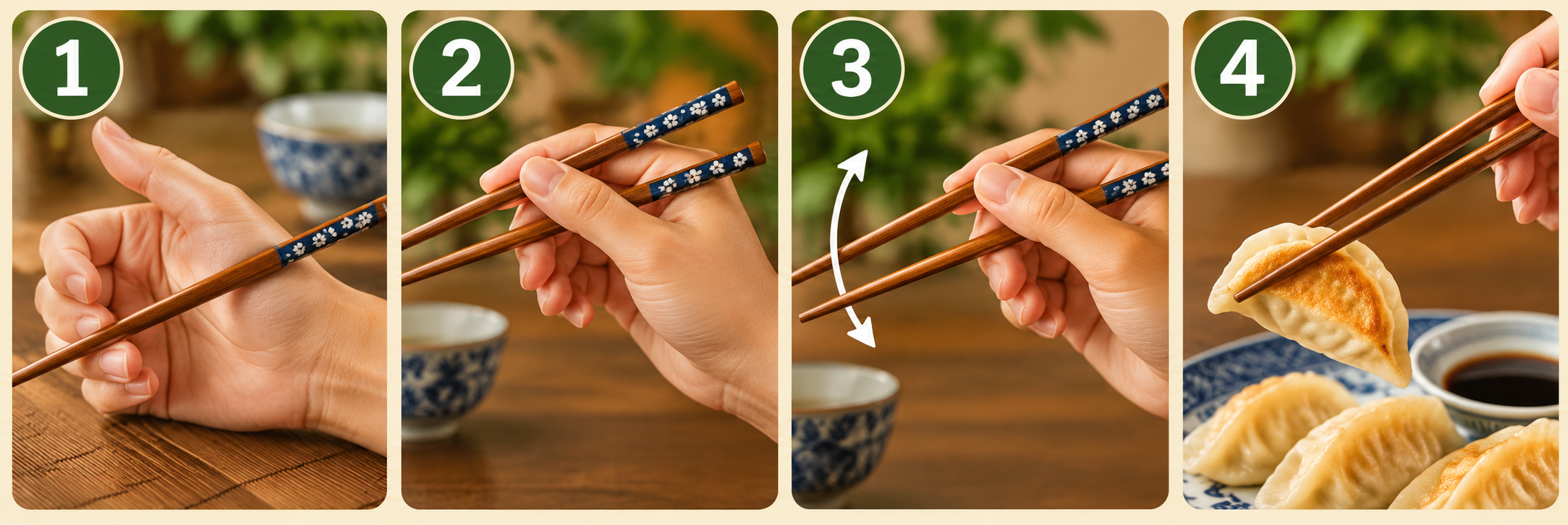
How to Hold Chopsticks
1. Position the bottom chopstick
Rest it against the base of your thumb and support it with your ring finger. This chopstick stays relatively still.
2. Add the top chopstick
Hold the second chopstick a little like a pencil, using your thumb, index finger, and middle finger.
3. Move the top chopstick
Keep the bottom one steady. Move the top chopstick up and down until the tips come together.
4. Pick something up!
Start with something fairly easy to grasp. Bring the tips together gently around the food and lift.
An Important Chopstick Custom to Learn
Don't stick your chopsticks upright in a bowl of rice. Upright chopsticks resemble incense used in traditional offerings for the dead and are associated with funerary customs. When you're not using them, lay them down instead.
The Chopstick Challenge
Ready to put your chopstick skills to the test?
Try picking up a few different foods or small objects. Start with something easy, then work your way up to something more difficult.
How many can you pick up without dropping?
How Did You Do?
Practice using chopsticks each day for a week. At the end of the week see if you can beat your original score.
Answers to the Chinese Food Challenge
A. 春卷 chūnjuǎn — Picture 3 — spring roll
B. 面条 miàntiáo — Picture 4 — noodles
C. 炒饭 chǎofàn — Picture 1 — fried rice
D. 饺子 jiǎozi — Picture 2 — dumplings
What’s Your Favorite Chinese Food?
Was your favorite Chinese food in our challenge?
Maybe you love something completely different. We’d love to hear about it! Tell us your favorite Chinese dish, or suggest a food or cultural topic you’d like to see in a future Mandarin Made Clear post.
Contact us and send us your idea.
Ready to Learn More Mandarin?
Knowing the names of your favorite foods is a great start. But what if you could order them, ask questions, and have a simple conversation in Mandarin?
Beginner Mandarin Foundations is an eight-week live online course designed for adults who are new to Mandarin. We build the language step by step, so you understand what you're learning and can begin using it with confidence.
Learn more about Beginner Mandarin Foundations.