
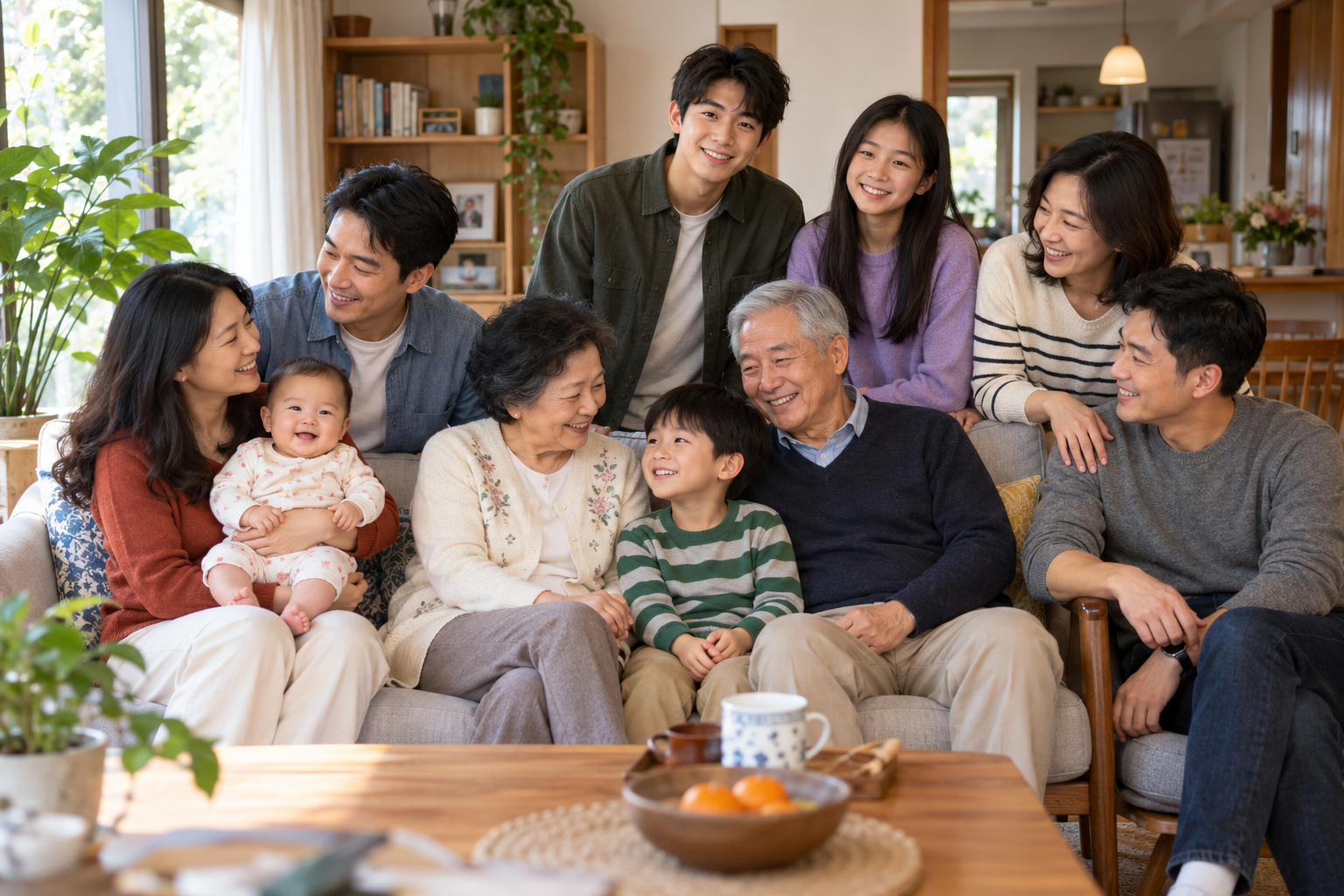
In Chinese, family words often tell you more than their English equivalents. Is your brother older or younger? Is your grandmother your mother’s mother or your father’s mother? The word you choose makes that relationship clear.
These distinctions reflect a long tradition of attention to family relationships. Confucian teachings emphasized respect for parents and elders, responsibilities between generations, and each person’s place within the family. Families today vary in how they follow those traditions, but the language still preserves many of these distinctions. Let’s meet the family and see how these words are used.
Parents and Children
Let’s begin with the closest family relationships:
妈妈 māma: mom
爸爸 bàba: dad
儿子 érzi: son
女儿 nǚ’ér: daughter
宝宝 bǎobao: baby
Listen and Practice: Each audio recording features three different Mandarin voices. Listen to each speaker and repeat aloud to practice your pronunciation.
妈妈 and 爸爸 are familiar, everyday words, much like “Mom” and “Dad.” You can use them to address your parents or to talk about them.
宝宝 is an affectionate word for a baby. Parents may also use it as a loving nickname for their child.
Try introducing someone:
这是我妈妈。 Zhè shì wǒ māma: This is my mom.
这是我爸爸。 Zhè shì wǒ bàba: This is my dad.
这是我儿子。 Zhè shì wǒ érzi: This is my son.
这是我女儿。 Zhè shì wǒ nǚ’ér: This is my daughter.
这是我宝宝。 Zhè shì wǒ bǎobao: This is my baby.
这是我…… Zhè shì wǒ… means “This is my…”
How would you introduce one of these people in your family?
Older or Younger? Talking About Siblings
In English, “brother” or “sister” doesn’t tell us who is older. In Mandarin, you choose a different word depending on whether that person is older or younger than you.
哥哥 gēge: older brother
弟弟 dìdi: younger brother
姐姐 jiějie: older sister
妹妹 mèimei: younger sister
These words describe age relative to you. Your 哥哥 doesn’t have to be the oldest child in the family. He just has to be older than you.
Try introducing a sibling:
这是我哥哥。 Zhè shì wǒ gēge: This is my older brother.
这是我弟弟。 Zhè shì wǒ dìdi: This is my younger brother.
这是我姐姐。 Zhè shì wǒ jiějie: This is my older sister.
这是我妹妹。 Zhè shì wǒ mèimei: This is my younger sister.
Try asking and answering the following questions:
你有哥哥吗? Nǐ yǒu gēge ma? Do you have an older brother?
你有弟弟吗? Nǐ yǒu dìdi ma? Do you have a younger brother?
你有姐姐吗? Nǐ yǒu jiějie ma? Do you have an older sister?
你有妹妹吗? Nǐ yǒu mèimei ma? Do you have a younger sister?
有 yǒu means “have.” Add 吗 ma at the end to turn 你有…… “You have…” into a yes-or-no question.
To answer, use:
有。 Yǒu: Yes, I do.
没有。 Méiyǒu: No, I don’t.
If you have at least one, answer 有 yǒu. For example, whether you have one older brother or several, your answer to 你有哥哥吗? is 有。
Grandma and Grandpa: Which Side of the Family?
In Mandarin, the words for grandparents tell you whether they are on your father’s side or your mother’s side.
Your father’s parents:
爷爷 yéye: grandfather, your father’s father
奶奶 nǎinai: grandmother, your father’s mother
Your mother’s parents:
外公 wàigōng: grandfather, your mother’s father
外婆 wàipó: grandmother, your mother’s mother
You may also hear 姥爷 lǎoye for your mother’s father and 姥姥 lǎolao for your mother’s mother, especially in northern China. The words families use can vary by region and family tradition.
Try introducing your grandparents:
这是我爷爷。 Zhè shì wǒ yéye: This is my grandfather on my father’s side.
这是我奶奶。 Zhè shì wǒ nǎinai: This is my grandmother on my father’s side.
这是我外公。 Zhè shì wǒ wàigōng: This is my grandfather on my mother’s side.
这是我外婆。 Zhè shì wǒ wàipó: This is my grandmother on my mother’s side.
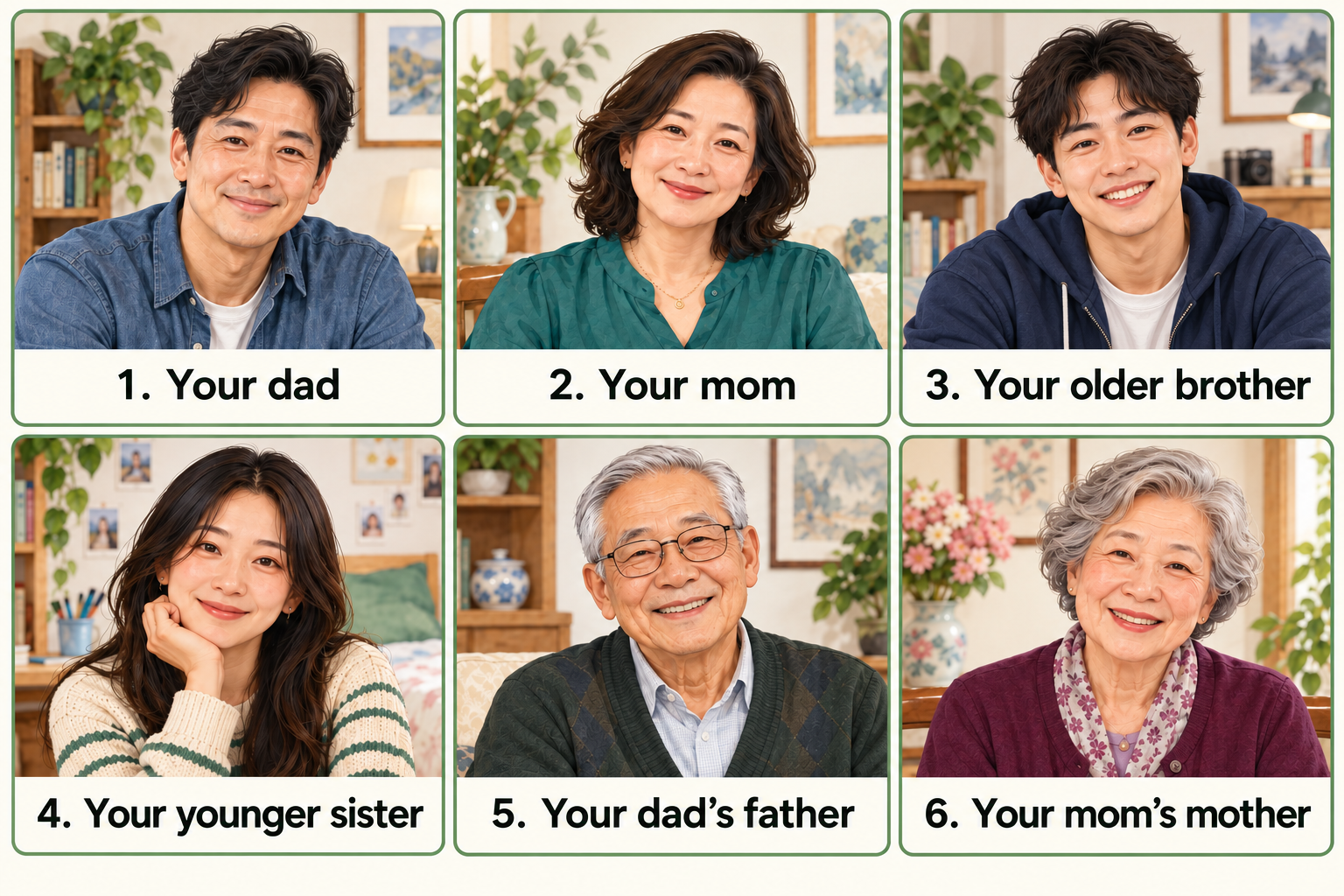
Family Picture Challenge
Can you name these family members in Mandarin?
Say each word aloud, then check the answers below.
Answers: 1. 爸爸 bàba; 2. 妈妈 māma; 3. 哥哥 gēge; 4. 妹妹 mèimei; 5. 爷爷 yéye; 6. 外婆 wàipó
Make It Personal
Find a family photo and see how many people you can introduce in Mandarin. Start with 这是我…… Zhè shì wǒ… “This is my…” and use the words you’ve learned here.
Want to build on these first steps? Explore Beginner Mandarin Foundations, our live online course for adult beginners, with clear explanations, guided practice, and opportunities to ask questions.